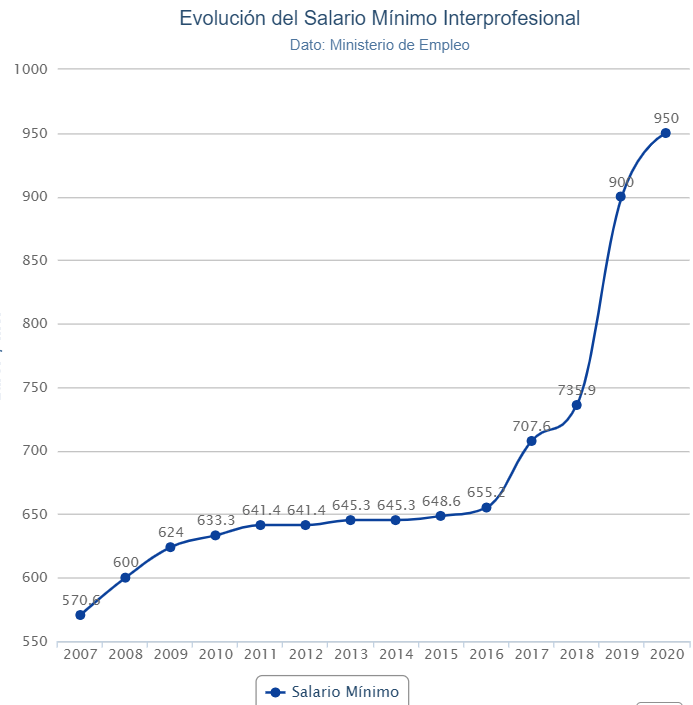
Son 50 euros mas que en 2019 y el incremento se aplicara desde el 1 de enero con carácter retroactivo. El 45% es la subida que ha experimentado el SMI en 4 años: entre 2016 y 2020.
Dos millones de trabajadores beneficiados segun cifras provisionales de Trabajo, puesto que no incluyen a los trabajadores a tiempo parcial. Podemos ver que este incremento no repercute a todos los trabajadores. En noticias de días anteriores se menciona una subida del 2% del salario de los funcionarios.
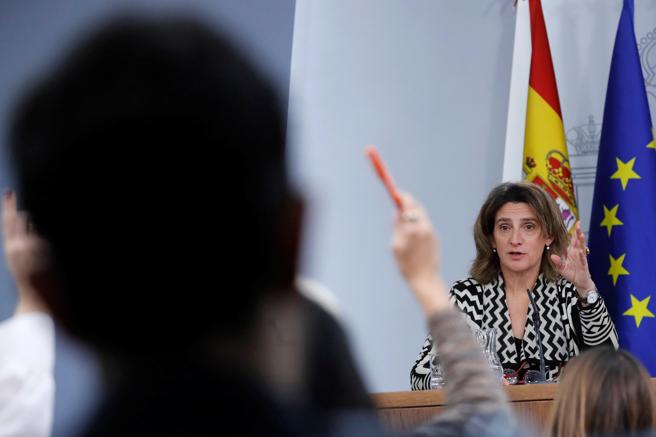
El Gobierno, los representantes empresariales y de los trabajadores han llegado este miércoles a un acuerdo para subir el salario mínimo interprofesional para 2020 a 950 euros al mes. Serán 50 euros más que el actual, de 900 euros. Según ha apuntado la ministra de Trabajo, Yolanda Díaz, la medida afectará a más de dos millones de trabajadores, además de los temporales, y tendrá carácter retroactivo desde el 1 de enero, de manera que las empresas deberán repercutir desde entonces la subida del sueldo y de las cotizaciones sociales. Díaz ha destacado que todas las partes han cedido en una negociación «discreta» que empezó nada más formarse el Gobierno y que ha terminado por acordar un punto medio entre las aspiraciones de los sindicatos, y de la propia ministra, de una subida de 1.000 euros ya este año, y la de la patronal, que no quería un nuevo incremento después de la subida récord del año pasado porque cree que es perjudicial para la empresa, tal y como han señalado este miércoles los presidentes de la CEOE, Antonio Garamendi, y de CEPYME, Gerardo Cuerva.
En todo caso, como los sindicatos y la ministra, la patronal también ha destacado como algo positivo que se haya retomado le diálogo social para subir el salario mínimo, después de que en diciembre de 2018 el Gobierno anterior de Pedro Sánchez decretara sin acuerdo con ellos la mayor subida en décadas, de, 22,3%, hasta los 900, que serán ahora 950 euros mensuales, en 14 pagas.
Lo que podemos ver es que la principal preocupación del gobierno es subir el sueldo mínimo, cosa que en parte es una noticia positiva y en parte no. Por ejemplo, muchas empresas no son capaces de ofrecer un salario de 950, ya que si fuera así, la empresa no obtendría beneficios suficientes y no seria un negocio rentable. Esta subida de impuestos con el capitalismo de por medio se hace algo mas costosa a causa de la importancia y el peso que tiene este sistema económico en nuestro país.
The government agrees with companies and unions to raise the SMI to 950 euros
It is 50 euros more than in 2019 and the increase will be applied from January 1st retroactively. 45% is the increase that the SMI has experienced in 4 years: between 2016 and 2020.
Two million workers benefited according to provisional figures from Labor, since they do not include part-time workers. We can see that this increase does not affect all workers. In news from previous days, a 2% increase in the salary of civil servants is mentioned.
The Government, business and workers’ representatives reached an agreement on Wednesday to raise the minimum inter-professional salary for 2020 to 950 euros per month. It will be 50 euros more than the current 900 euros. According to the Minister of Labor, Yolanda Díaz, the measure will affect more than two million workers, in addition to temporary workers, and will be retroactive to January 1, so that companies will have to pass on the increase in wages and social contributions from then on. Diaz has stressed that all parties have given way in a «discreet» negotiation that began immediately after the formation of the government and has ended up agreeing a midpoint between the aspirations of the unions, and the minister herself, a rise of 1,000 euros already this year, and the employers, who did not want a new increase after the record high last year because they believe it is detrimental to the company, as pointed out this Wednesday by the presidents of the CEOE, Antonio Garamendi, and CEPYME, Gerardo Cuerva.
In any case, like the unions and the minister, the employers have also highlighted as something positive that social dialogue has been resumed to raise the minimum wage, after in December 2018 the previous government of Pedro Sanchez decreed without agreement with them the largest increase in decades, from 22.3% to 900, which will now be 950 euros per month, in 14 payments.
What we can see is that the government’s main concern is to raise the minimum wage, which is partly good news and partly not. For example, many companies are not able to offer a salary of 950, because if that were the case, the company would not make enough profit and would not be a profitable business. This tax increase with capitalism in the middle becomes a little more expensive because of the importance and weight that this economic system has in our country.



 TODO CAPITALISMO